What the Eye Cannot See: The Acoustic Architecture of Fear in Ocean Cinema
There is a particular kind of terror that belongs exclusively to the sea. It is not the terror of a visible predator, nor the straightforward menace of a storm-tossed deck. It is something older and more patient—a dread that seeps through the hull of a vessel the way cold water seeps through a failing seam. For filmmakers working in the maritime genre, capturing this quality on screen has always presented a fundamental problem: the ocean conceals far more than it reveals. The camera, for all its technical sophistication, remains a surface instrument. Sound, by contrast, travels through walls.
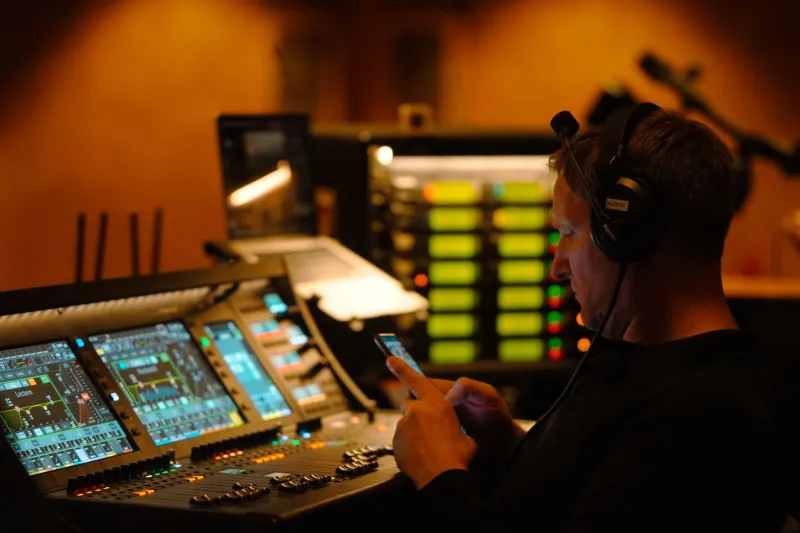
This is why the most accomplished ocean thrillers in American cinema have consistently relied on their sound departments to carry the psychological weight that imagery alone cannot bear. The craft of maritime sound design is, in many respects, a discipline of productive absence—the deliberate construction of an auditory world that suggests vastness, depth, and unnamed threat without ever fully resolving those suggestions into something the audience can process and dismiss.
The Hull as Instrument
Among the most potent tools available to a maritime sound designer is also among the most mundane: the sound of a ship's hull under stress. Creaking, groaning, and the rhythmic flex of metal or timber under wave pressure communicate something that no visual element can replicate with equal efficiency. These sounds are not merely atmospheric; they carry information. A hull under strain tells an audience, subliminally but unmistakably, that the vessel is not an extension of solid land. It is a negotiation—a temporary agreement between human engineering and a force that has no particular interest in honoring that agreement.
Sound designers working on maritime productions frequently record actual vessels in open water, capturing the acoustic signatures of different hull materials and construction types under varying sea conditions. These recordings are then layered, pitched, and timed to create a sonic texture that operates beneath conscious attention. The audience does not think, "I hear the hull flexing." They think, "Something is wrong here," and they cannot identify why. That gap between sensation and comprehension is precisely where dread takes root.
Foghorns, Distance, and the Geometry of Isolation
The foghorn occupies a singular position in the vocabulary of maritime sound design. Its function is, ostensibly, communicative—a warning broadcast into obscured air. But in cinema, its emotional register is something else entirely. A distant foghorn, heard but not answered, communicates isolation with a directness that dialogue rarely achieves. It implies other vessels, other presences, other possible rescuers—and then, through its very distance and its failure to repeat, withdraws that implication.
Filmmakers have long understood this dynamic. The strategic placement of a foghorn cue in a scene of maritime peril does not merely establish weather conditions. It establishes the precise dimensions of a character's aloneness. When the horn sounds from far off and then fades, the silence that follows is measurably heavier than the silence that preceded it. The audience has been shown the boundary of the world the character inhabits, and it is a very small world.
Sound designers working in the Dolby Atmos environment now have the ability to position these cues in three-dimensional space, allowing a foghorn to drift from one speaker array to another in a way that mimics the disorienting acoustics of open water. The effect, in a properly equipped theater, can be genuinely vertiginous.
Biological Sound and the Unconscious Mind
Perhaps no category of maritime sound carries more psychological complexity than the biological—the calls, movements, and acoustic signatures of the creatures that inhabit the ocean at depth. Whale vocalizations, in particular, occupy a frequency range that interacts in unusual ways with human auditory processing. Low-frequency whale calls, when reproduced at sufficient volume, produce physical sensations as much as auditory ones. Audiences feel them in the chest and sternum before they consciously register them as sound.
This quality has not been lost on sound designers and composers working in the maritime thriller tradition. The integration of whale calls—sometimes processed beyond immediate recognition, sometimes left in their unaltered form—into a film's ambient sonic bed creates an undertone of biological enormity. It reminds the audience, without stating it explicitly, that the ocean is not empty. It is populated, and the things that populate it are large, and they communicate in registers that human beings can perceive but not interpret.
Composers working in this space have increasingly blurred the line between score and sound design, building musical textures from recorded ocean biology that function simultaneously as music and as environmental sound. The result is a listening experience in which the boundary between the film's world and its emotional commentary on that world becomes productively unclear.
Water Pressure and the Architecture of Depth
The ocean's most terrifying quality may be its depth—the sheer, incomprehensible volume of water that exists beneath any given vessel's keel. This quality is, by definition, invisible. No camera placed on the surface of the water can show an audience what lies beneath without fundamentally changing the nature of the threat. But sound can suggest depth in ways that vision cannot.
The acoustic phenomenon of water pressure—the way sound behaves differently at depth, the way it compresses and distorts—has become a resource for sound designers seeking to evoke the submarine dimension of maritime dread. Recordings made at depth, or processed to simulate the acoustic conditions of deep water, carry a quality of compression and strangeness that registers as profoundly wrong to the human ear. These sounds do not belong to the surface world. When they appear in a film's soundtrack, they import something of the deep into the audience's experience—a suggestion that the boundary between surface and abyss is more permeable than the hull of any vessel can guarantee.
Silence as the Final Instrument
All of these techniques—the groaning hull, the retreating foghorn, the biological undertone, the pressurized deep—derive their power in part from their relationship to silence. Maritime sound design is, ultimately, a discipline of contrast. The terror of open water is inseparable from the quiet that surrounds it. When a sound designer pulls back the ambient texture of a scene and leaves an audience with only the faint lap of water against a hull, the effect is not peaceful. It is anticipatory. The silence does not suggest safety; it suggests that whatever was making noise has stopped, and the reason it has stopped is not reassuring.
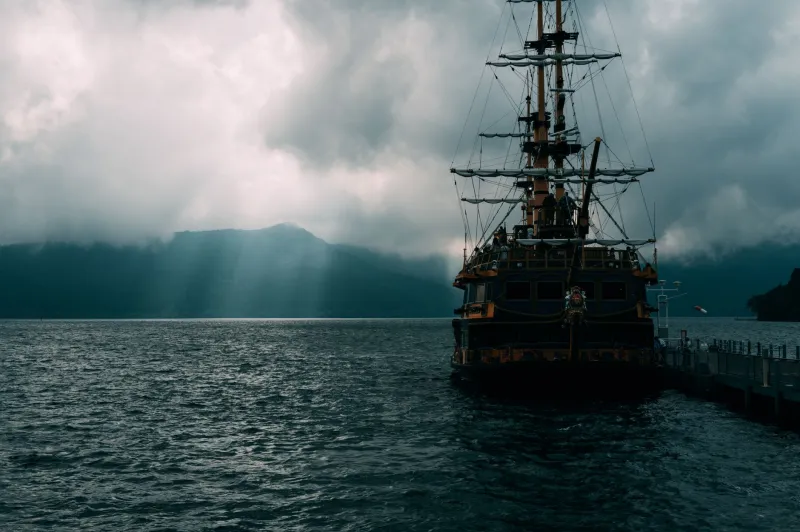
For a production like The Sea Wolf, in which the ocean functions not merely as setting but as moral environment—a space that strips away the protections of civilization and exposes characters to something elemental and unforgiving—this sonic dimension is not supplementary. It is structural. The sound of Wolf Larsen's world must communicate what his world is before a single line of dialogue is spoken. The Ghost does not merely travel through water. It moves through a sound design that makes the water itself feel like a presence, a judgment, a condition that the characters aboard cannot escape and cannot fully comprehend.
That is what the best maritime sound design accomplishes. It makes the ocean audible in its full, terrible complexity—not as background, but as antagonist.