No Walls Required: The Art of Manufacturing Dread in Open-Water Cinema
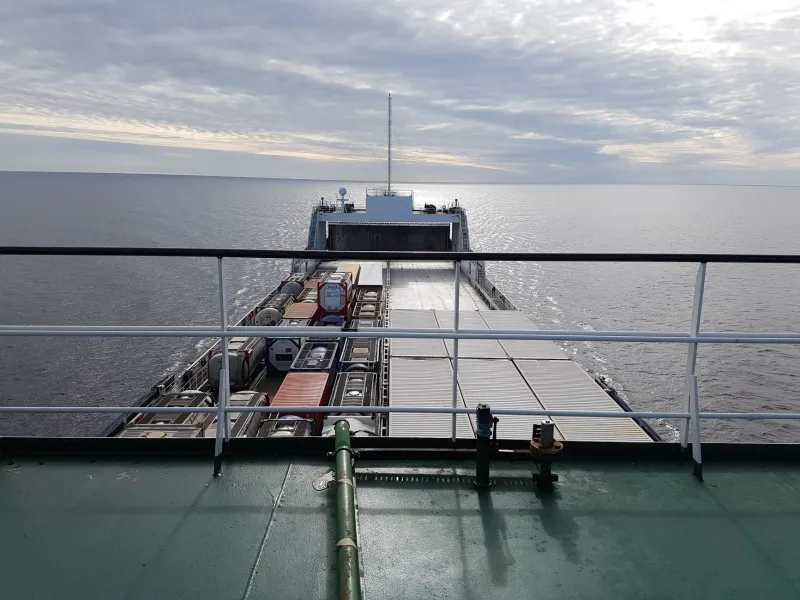
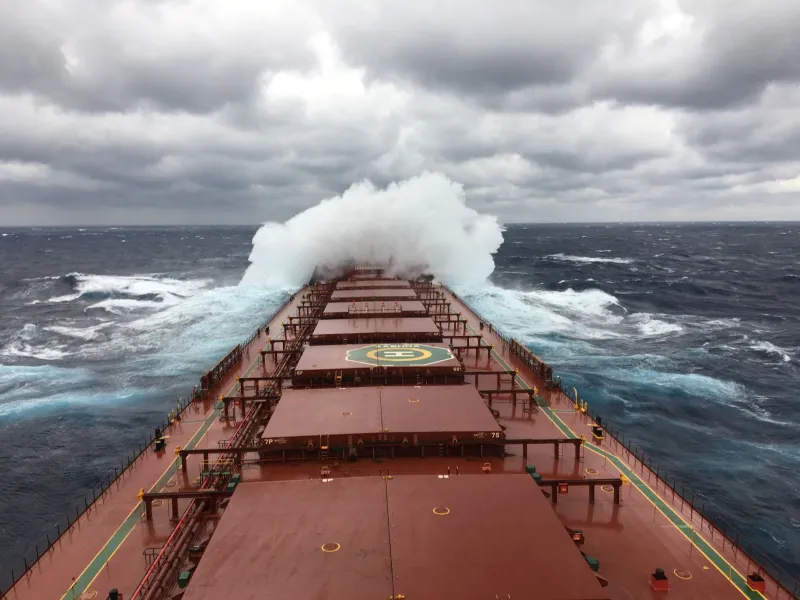
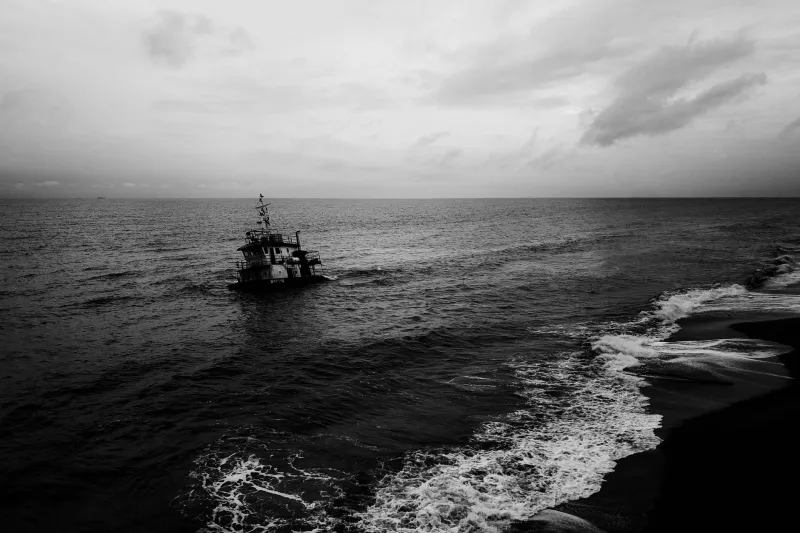
There is a particular cruelty embedded in the open ocean as a cinematic setting. Unlike a dungeon, a submarine corridor, or a locked room, the sea offers the eye an unbroken horizon in every direction. There is, by any rational measure, more space than a human being could ever need. And yet the most enduring nautical thrillers in American cinema have consistently demonstrated that boundlessness, handled correctly, becomes its own form of imprisonment — perhaps the most psychologically devastating kind.
This is not an accident. It is craft.
The Paradox at the Heart of Maritime Horror
To understand how open-water films manufacture claustrophobia, one must first accept the central paradox: the vastness of the ocean does not liberate the characters trapped within it. It condemns them. When a character aboard a vessel looks toward the horizon and sees nothing but water, the brain does not register freedom. It registers the absolute impossibility of escape. The horizon becomes a wall. The water beneath becomes a floor that cannot be stood upon. The sky above offers no purchase, no ladder, no mercy.
This is the psychological mechanism that the most skilled maritime filmmakers have learned to exploit with surgical precision. The ocean's immensity is not a backdrop. It is the trap itself.
In Roman Polanski's Knife in the Water (1962), a film that remains one of the most suffocating psychological dramas ever committed to celluloid, the vessel is barely large enough to hold its three characters. Polanski and cinematographer Jerzy Lipman made a series of decisions that would influence maritime filmmaking for decades: tight framing that cuts off the horizon, camera angles that emphasize the smallness of the deck relative to the bodies occupying it, and a near-total absence of establishing shots that might remind the viewer of the surrounding openness. The result is a film that feels as though it takes place in a studio apartment rather than on open water. The claustrophobia is not incidental. It is the film's entire argument.
Production Design as Psychological Architecture
The physical construction of a vessel — whether built practically on a soundstage or dressed on location — functions as the primary instrument through which production designers create confinement. The choices are rarely accidental.
Consider the below-deck spaces that recur throughout maritime cinema. The low ceilings, the exposed pipes and rigging, the narrow passages between bunks — these are not simply realistic details. They are deliberate architectural choices that force the human body into postures of submission. Characters must duck, must turn sideways, must navigate spaces that seem designed to remind them of their own vulnerability. Production designers working in this genre understand that the camera's relationship to a cramped interior creates a fundamentally different emotional register than the same camera pointed at open water.
The tension between these two spaces — the suffocating below-deck world and the terrifying openness above — is what gives the best nautical thrillers their distinctive rhythm. Characters seek the deck for relief and find the horizon mocking them. They retreat below and find the walls pressing inward. There is no comfortable position. There is no safe room.
This dynamic is particularly evident in Master and Commander: The Far Side of the World (2003), where director Peter Weir and production designer William Sandell created a below-deck environment aboard the HMS Surprise that functions almost as a separate psychological world. The contrast between the cramped, candlelit interior and the vast, cold Pacific above is not merely visual. It is the film's structural spine — the perpetual oscillation between two varieties of dread.
Cinematography and the Grammar of Confinement
If production design builds the trap, cinematography springs it. The lens choices, focal lengths, and framing decisions that maritime directors favor reveal a consistent grammar of psychological compression.
Wide-angle lenses, used in close quarters, distort the edges of the frame in ways that subtly disorient the viewer. Telephoto compression, deployed on deck shots, flattens the distance between a character and the horizon, making the water seem closer, more immediate, more threatening. Overhead shots — a staple of maritime cinematography — reduce human figures to small, isolated objects adrift in a field of indifferent water. The viewer is positioned as a distant, godlike observer, and the characters below become painfully, visibly small.
The handheld camera, deployed strategically, introduces a physical restlessness that mirrors the psychological state of characters under extreme stress. When the camera cannot find a stable position, neither can the audience. The vessel's motion — real or simulated — becomes the viewer's motion. The body responds to this instability in ways that are not entirely cognitive. Discomfort registers below the level of conscious thought.
Sound Design and the Architecture of Silence
Perhaps no element of maritime filmmaking is more underappreciated — or more ruthlessly effective — than sound design. The ocean is not a quiet environment, but it is an environment whose sounds carry no comfort. The creak of hull timber, the slap of water against steel, the low moan of wind through rigging — these are sounds that the human auditory system registers as warnings rather than reassurances.
The most accomplished sound designers working in this genre understand the value of what is absent as much as what is present. The sudden removal of ambient ocean sound — a momentary, impossible silence in the middle of the sea — is one of the most reliably effective tools for generating dread. The audience knows, instinctively, that the ocean is never silent. When the sound drops away, something is wrong. Something is about to happen.
Robert Redford's nearly dialogue-free All Is Lost (2013) is perhaps the most extreme example of sound design as psychological instrument in American maritime cinema. J.C. Chandor and sound designer Richard Hymns built an entire emotional architecture from the relationship between water sounds, vessel sounds, and the terrifying intervals of near-silence that punctuate them. The film's power is inseparable from its soundscape.
What Wolf Larsen Understood
For those following the development of The Sea Wolf as a film project, these craft considerations are not merely academic. Jack London's original novel is, among other things, a sustained meditation on the psychology of confinement at sea. Wolf Larsen's Ghost is not simply a ship. It is a controlled environment, a floating laboratory in which Larsen exercises dominion over every variable — including the spatial and psychological experience of those aboard.
The challenge for any filmmaker adapting this material lies in translating that dominion into cinematic terms. The ocean's vastness must become the story's prison. The horizon must become the wall. Every craft decision — every lens choice, every sound cue, every production design detail — must serve that fundamental psychological argument.
The ocean has no mercy. Neither, it turns out, does the camera — when it is wielded by someone who truly understands what the water can do to a human mind.