The Deep Refuses to Run Out of Monsters: Why the Ocean Is Horror's Last Honest Setting
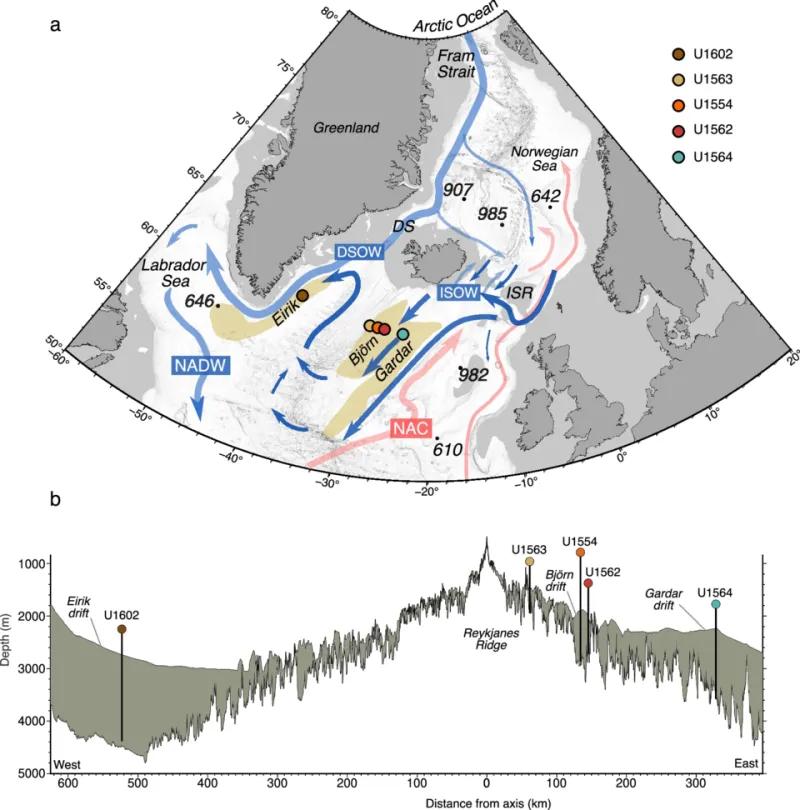
Photo: Matthias Sinnesael, Boris-Theofanis Karatsolis, Paul N. Pearson et al., CC BY 4.0, via Wikimedia Commons
Horror is a genre that exhausts its settings the way a mine exhausts a seam. The haunted house has been deconstructed to the studs. The slasher's summer camp has become a nostalgic costume. Even space — once the final frontier of the unknowable — has been so thoroughly mapped by decades of films that the average viewer now knows the beats before the crew knows the danger. What remains genuinely unmapped? Look down.
The Ocean's Unfair Advantages
The case for the sea as horror's last honest setting rests on three facts that no other horror environment can claim.
First, the darkness is real and total. Sunlight dies within roughly two hundred meters of the surface; below that, there is no photography, no rescue, no reference point. Space at least offers stars. The deep offers nothing, and audiences intuitively understand this.
Second, the pressure is not a metaphor. At depth, the ocean exerts forces that kill without malice and without drama — a hull breach, a depth collapse, a body recovered changed in ways that require no makeup. Horror thrives on physical truth, and the ocean supplies more of it than any writers' room could invent.
Third, and most importantly: we have not finished looking. Scientists estimate that a majority of the ocean's species remain undescribed. Every deep-sea expedition returns with footage of creatures that look designed by a horror director. No other frontier on Earth can make that claim. The unknown is not a conceit of the genre here — it is a documented inventory.
What the Genre Has Already Proven
The ocean's horror credentials are not theoretical. The shark film established that a single, mostly unseen predator can carry an entire American cultural moment — the effect of Jaws on beach attendance in 1975 remains the genre's most powerful demonstration of audience suggestibility. The underwater haunted-ship film, the trapped-submarine thriller, the abyssal creature feature: each has produced landmark entries, and each has done so while barely scratching the surface of the setting's potential.
Compare that to the slasher, where the rules are so codified they function as a grammar, or to space horror, where the isolation premise has been refined to a formula. The sea keeps resisting codification because it keeps producing real phenomena — rogue waves measured at impossible heights, sounds recorded in the deep that remain unexplained, currents that swallow vessels whole — that no formula anticipated.
The Anxiety of the Present Moment
There is also a cultural current working in the ocean's favor. American audiences in the last decade have watched a real submersible disaster unfold on live television, absorbed headlines about deep-sea mining and collapsing fisheries, and lived through a pandemic that made the psychology of isolation and unseen threat viscerally familiar. The sea speaks directly to that anxiety: it is vast, indifferent, and impossible to fully know — a mirror for an era in which the biggest threats feel systemic rather than personal.
Horror has always been a barometer. The haunted house spoke to domestic anxieties; the zombie to contagion and collapse. The ocean speaks to something more contemporary and more destabilizing — the recognition that the world itself contains environments fundamentally hostile to human life, and that we have explored less of our own planet's floor than of the moon's surface.
The Case, Stated Plainly
The ocean will drive horror's next wave not because filmmakers run out of ideas elsewhere, though many have, but because the sea is the only setting where the genre's core promise — the unknown made physical — is still literally true. Every other frontier has been closed by knowledge. The deep remains open, dark, and waiting. American horror has always done its best work when it points at something real and says: that could happen. Below the waterline, everything could. That is not a premise. That is a pipeline.