The Weight of Menace: What It Really Takes to Cast a Maritime Antihero for the Modern Screen
There is a particular kind of silence that falls over a casting room when the right actor walks through the door. Not the silence of uncertainty, but of recognition — the collective, unspoken acknowledgment that something dangerous has just entered the space. For casting directors working on maritime thrillers, that silence is not merely desired. It is the entire standard.
The sea captain archetype, descended in no small part from literary figures like Jack London's Wolf Larsen, presents one of cinema's most exacting performance demands. These characters are not straightforward villains. They operate in a morally ambiguous register that requires an actor to project cruelty and charisma in equal measure — to be the kind of man audiences would follow across an ocean even as they prayed they never had to.
Why the Sea Wolf Archetype Breaks Conventional Casting Logic
Traditional villain casting often leans on physicality — the imposing frame, the cold stare, the voice that drops an octave below comfort. Maritime antiheroes, however, demand something more layered. The sea captain who rules through fear alone is a flat character. The one who rules through authority — through the suggestion that he knows something about survival that no one else does — becomes unforgettable.
Veteran casting director Patricia Halwell, whose credits span more than two decades of studio and independent productions, describes the distinction plainly: "You can teach an actor to look threatening. You cannot teach them to make a room feel smaller just by existing in it. That's what we're looking for. The camera sees through performance. It rewards presence."
This is precisely why many of the most effective maritime antiheroes in recent American cinema have been played by actors who were not initially considered obvious choices. The brute-force approach to casting these roles has repeatedly yielded one-dimensional results. The counterintuitive casting — the actor with a scholar's intelligence behind weathered features, or the compact performer whose stillness reads as coiled danger — has more often produced the kind of complexity that sustains a film.
The Audition Room as Open Water
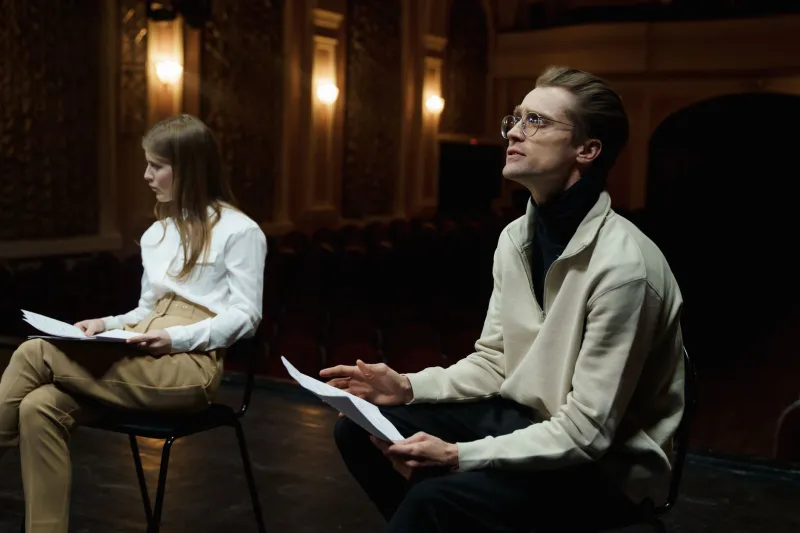
Industry professionals who specialize in nautical and maritime productions describe a casting process that differs meaningfully from standard dramatic fare. The audition itself is frequently designed to disorient.
Rather than presenting actors with conventional scene work, some directors favor placing candidates in improvisational scenarios that strip away prepared technique. An actor may be asked to command a room of extras without raising his voice, or to deliver a monologue while physically confined — a deliberate invocation of the claustrophobic geography of a ship's deck or below-decks quarters.
"We want to see what happens when the script isn't there to protect them," explains one Los Angeles-based casting associate who has worked on three nautical productions in the past five years. "The great ones don't panic. They get quieter. And that quietness is exactly what the role requires."
Physical preparation is also scrutinized, though not in the ways one might expect. Studios are less concerned with an actor's capacity for action-sequence performance than with how convincingly he carries the knowledge of the sea in his body. The way a man braces against a rolling deck, the manner in which he scans a horizon — these details, small as they appear, register subliminally with audiences. Performers who commit to maritime research, who have spent time aboard working vessels or studied the mechanics of seamanship, consistently deliver more credible work than those who approach the role as purely psychological.
What Studios Are Actually Looking For
When studio executives and directors are pressed to articulate the qualities they seek in an actor for these roles, three attributes emerge with notable consistency: earned authority, suppressed volatility, and intellectual menace.
Earned authority refers to the sense that a character's power was not granted but accumulated — that he has paid for every ounce of command he exercises. Actors who project this quality tend to have a deliberateness to their movement and speech, an economy that suggests they have learned, through hard experience, precisely how much force any situation requires.
Suppressed volatility is the undercurrent that keeps audiences alert. The maritime antihero is most frightening not when he erupts, but in the moments before — when the audience can feel the pressure building behind a measured expression. This is among the most technically difficult qualities to sustain across a full performance, and it is frequently what separates a memorable portrayal from a merely competent one.
Intellectual menace, perhaps the most critical of the three, is the quality that transforms a dangerous man into a compelling one. Wolf Larsen endures as a literary figure not because he is violent, but because he is right about things — uncomfortably, devastatingly right — in ways that unsettle the moral frameworks of those around him. Actors capable of channeling that particular form of intelligence, of making an audience question its own certainties, are exceedingly rare.
The Long Search and What It Reveals About Modern Cinema
The difficulty of casting these roles reflects something broader about the current state of American film. Audiences have grown sophisticated in their relationship with morally complex characters. The era of the uncomplicated antagonist has largely passed. Contemporary viewers expect — and reward — portrayals that resist easy categorization, that demand active interpretation rather than passive consumption.
Maritime settings amplify this dynamic. The ocean, as a narrative environment, is inherently hostile to sentimentality. It does not accommodate weakness, and it does not forgive error. Characters who inhabit that world convincingly carry the weight of that environment in every scene, even those set far from the water. The best actors understand this instinctively. The sea changes a man, and it should be visible.
For productions that get the casting right, the payoff is considerable. Audiences respond to the maritime antihero with a depth of engagement that few other character types can generate — the fascinated horror of watching someone operate entirely outside conventional moral constraint, and the unsettling recognition that, under sufficient pressure, the ocean has a way of making such men seem almost reasonable.
The search for that actor — the one who can carry all of that — continues. It always does. Because the role, like the sea itself, asks more than most are willing to give.