Jurisdiction of None: How the Open Sea Gives Screenwriters Permission to Rewrite the Rules
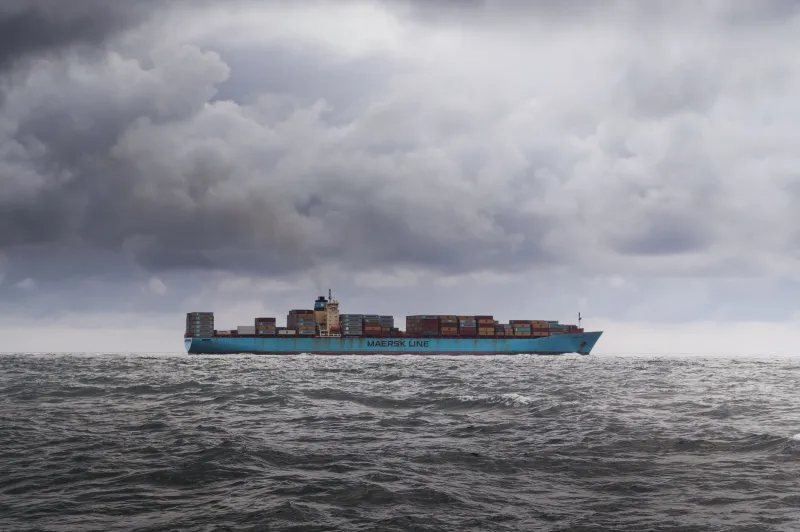
There is a legal concept, familiar to maritime attorneys and largely invisible to everyone else, known as the "law of the flag." In simple terms, a vessel on the open ocean is governed primarily by the laws of the nation whose flag it flies. Beyond that narrow jurisdiction, the authority of any single government dissolves rapidly. For most passengers and crew, this is a bureaucratic footnote. For screenwriters, it is an invitation.
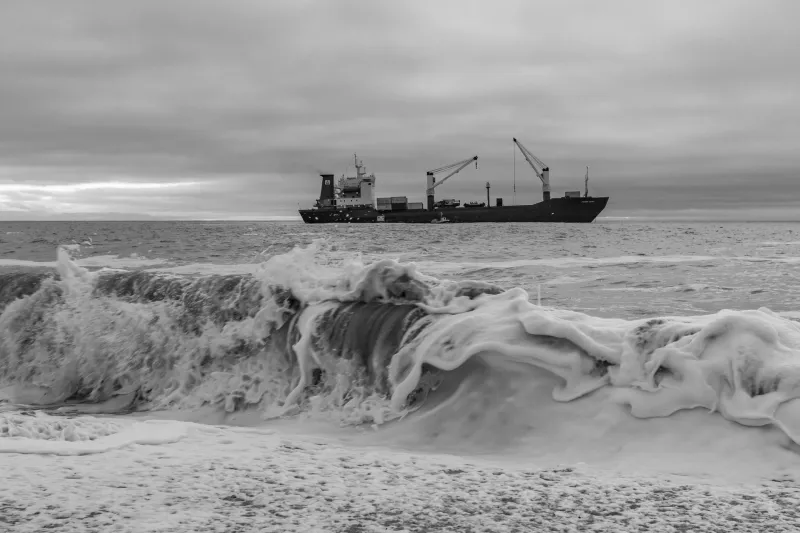
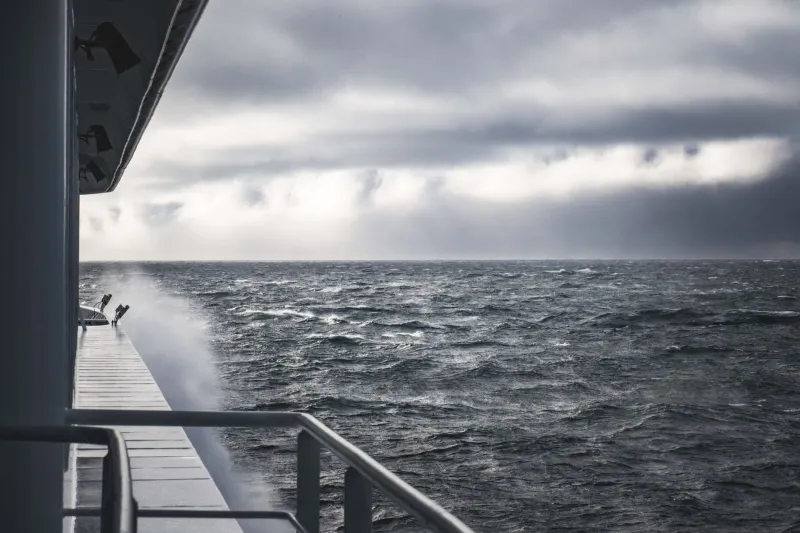
The ocean has long served as cinema's most reliable setting for moral experimentation, and the jurisdictional vacuum at the heart of maritime law is no small reason why. When a story moves beyond the twelve-mile territorial limit, the familiar architecture of accountability — police, courts, due process — recedes with the shoreline. What remains is a floating world governed by command, tradition, and whatever ethical convictions individual characters carry aboard. That tension between institutional absence and personal conscience is precisely the kind of friction that produces compelling drama.
The Legal Vacuum as Narrative Engine
Contemporary ocean thrillers have grown increasingly sophisticated in their exploitation of this ambiguity. Where earlier maritime films were content to use the sea as atmospheric backdrop, more recent productions treat jurisdictional uncertainty as a structural element of the screenplay itself. Characters in these films do not simply find themselves in danger — they find themselves in danger with nowhere to report it, no authority to appeal to, and no guarantee that the rules they understood on land have any purchase beneath the open sky.
This is a fundamentally different kind of jeopardy than what land-based thrillers can offer. In a city, even a corrupt one, there is always the theoretical possibility of intervention. A character can run to another precinct, cross a county line, call a federal agency. The machinery of governance, however imperfect, remains present. On the open ocean, that machinery is absent by design. The screenwriter is therefore free to construct situations in which characters must generate their own moral frameworks from scratch, without institutional scaffolding to guide or constrain them.
The result is a genre uniquely suited to exploring what people actually believe about right and wrong when no one is watching — and when no one is coming.
Power Concentrated, Ethics Tested
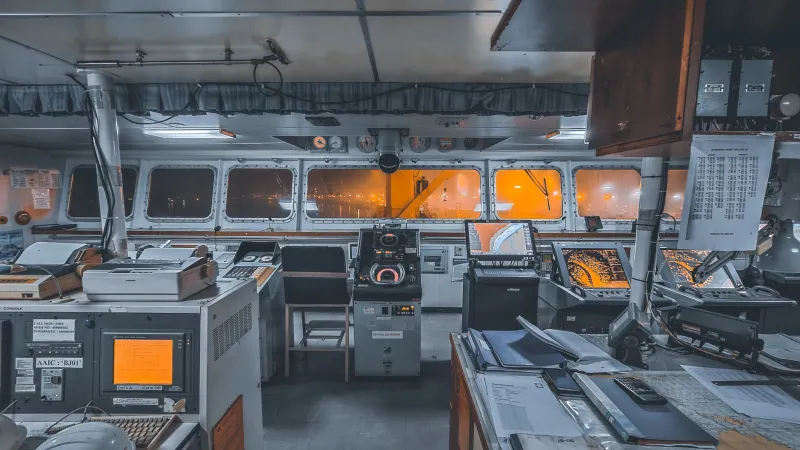
The legal architecture of maritime life also concentrates authority in ways that accelerate dramatic conflict. A ship's captain, under both tradition and international law, holds an extraordinary degree of power over those aboard. That power is not merely administrative. In genuine emergencies, a captain may make decisions about life and death that would constitute criminal acts on shore. The lawful authority to confine a crew member, alter course without passenger consent, or commandeer resources in a crisis creates a character type — the commander operating at the absolute edge of sanctioned power — that is almost impossible to construct convincingly in a contemporary land-based setting.
Screenwriters working in this genre understand that the captain figure is not simply a villain or a hero. The most durable maritime antagonists occupy a more uncomfortable position: individuals exercising authority that is technically legitimate within the vessel's compressed legal universe, even as their actions violate every reasonable moral standard. This gap between legality and morality is the engine that drives the genre's most enduring conflicts.
Jack London understood this instinctively when he constructed Wolf Larsen in The Sea Wolf, a novel that has influenced maritime cinema for well over a century. Larsen does not simply break rules. He operates within a system that grants him near-absolute authority and then presses that authority to its most brutal extreme. The horror of his character lies not in lawlessness but in the perverse legitimacy the sea extends to him.
Case Studies in Maritime Moral Ambiguity
Contemporary productions have returned to this template repeatedly, refining it for modern sensibilities. Films featuring private research vessels, commercial fishing operations, and cargo ships have all leveraged the isolation and authority structures of maritime life to place characters in situations where ethical compromise becomes not merely tempting but structurally encouraged.
One recurring scenario involves the discovery of a crime at sea — a death, a theft, a stowaway — with no mechanism for proper investigation. Characters who would, on land, immediately contact law enforcement instead must decide how much authority to assume themselves. The screenwriter's opportunity lies in watching those decisions accumulate. Each improvised judgment reveals something about the character that a conventional thriller, with its available institutions, would never expose.
Another productive scenario involves the economics of remote maritime operations. Commercial fishing, deep-sea salvage, and private charter work all involve financial pressures that are amplified by isolation. When a crew is three days from port and the catch is short, or when a salvage contract hangs on a decision that might endanger lives, the jurisdictional distance from any governing body gives characters room to rationalize choices that would be clearly impermissible onshore. The sea does not create moral failure — it simply removes the external deterrents that prevent it.
Why This Setting Remains Irreplaceable
In an era when digital connectivity has theoretically eliminated isolation — when a satellite phone or emergency beacon can summon assistance from almost anywhere on Earth — screenwriters have had to work harder to justify the legal and communicative vacuum that maritime thrillers depend upon. The solutions they have found are instructive.
Some productions have turned to deliberate sabotage of communication systems as a plot mechanism. Others have leaned into the economics of remote operations, where calling for help carries professional or financial consequences that characters are unwilling to accept. Still others have set their stories in periods or regions where the technological safety net genuinely did not exist. In each case, the goal is the same: to restore the jurisdictional emptiness that gives maritime storytelling its distinctive moral weight.
The ocean, in this sense, functions as cinema's most honest setting. It strips away the procedural comfort of institutions and forces characters — and audiences — to confront what ethics actually look like when they must stand on their own. No badge, no warrant, no appeal. Just the water, the vessel, and the choices that define who a person genuinely is.
For a production like The Sea Wolf, rooted in a source text that understood this dynamic before the genre had a name, the maritime setting is not a stylistic choice. It is the entire argument.