The Novel That Will Not Sink: Jack London's Enduring Grip on Maritime Cinema

Most novels, however celebrated in their time, eventually exhaust their usefulness to filmmakers. The cultural anxieties they addressed become historical artifacts. The character types they pioneered become clichés. The moral questions they posed find provisional answers, or simply cease to feel urgent. Jack London's The Sea Wolf, published in 1904, has resisted this fate with remarkable stubbornness.
The novel has been adapted for the screen at least seven times across more than a century of American cinema, by directors working in wildly different idioms and for audiences whose concerns had little obvious overlap. It has been made as a silent film, a studio-era prestige production, a television movie, and a European co-production. Each version has found something worth preserving and something worth discarding. None has been definitive. That inconclusiveness is itself a kind of testament.
What London Actually Wrote
To understand the novel's persistence, it is worth returning to what London actually constructed — not the cultural memory of Wolf Larsen, which has grown somewhat mythologized, but the text itself.
The Sea Wolf is narrated by Humphrey Van Weyden, a privileged literary critic who is rescued from a maritime accident by the schooner Ghost and its captain, Wolf Larsen. Larsen is physically extraordinary and intellectually formidable, a self-taught philosopher who has arrived at a brutal materialism: life is meaningless, strength is the only virtue, and compassion is a weakness that nature punishes. He refuses to return Van Weyden to shore and instead forces him to work as a cabin boy, subjecting him to a systematic education in cruelty.
What makes the novel more than a simple adventure story is London's refusal to make Larsen merely monstrous. He is also brilliant, curious, and capable of genuine aesthetic appreciation. His philosophical positions, however repugnant, are coherently argued. Van Weyden cannot simply dismiss him. He must engage with him, and that engagement changes Van Weyden in ways that are not entirely comfortable. The novel is, among other things, a story about how exposure to unchecked power alters the person who survives it.
Each Era, A Different Larsen
The history of The Sea Wolf adaptations is essentially a history of which aspects of Larsen each generation found most threatening — or most fascinating.
The early Hollywood versions, particularly the celebrated 1941 Warner Bros. production directed by Michael Curtiz and starring Edward G. Robinson, leaned into Larsen's physical dominance and raw authoritarian energy. Released as fascism was reshaping Europe and American isolationism was under serious pressure, that adaptation found in Larsen a recognizable type: the charismatic strongman who mistakes cruelty for strength and submission for loyalty. Robinson's Larsen was terrifying precisely because he was coherent, because his worldview had an internal logic that demanded refutation rather than simple rejection.
Later adaptations shifted emphasis. Television productions of the 1970s and 1980s, working within different constraints and for audiences shaped by Vietnam and Watergate, tended to foreground the novel's critique of institutional authority and the corruption that unchecked command produces. Larsen became less a philosophical adversary and more a portrait of what leadership looks like when it is stripped of accountability — a reading that resonated powerfully in an era of institutional disillusionment.
What Contemporary Filmmakers Are Finding
The question of what the present moment extracts from London's novel is necessarily speculative, but the patterns are becoming visible.
Contemporary productions appear most interested in the novel's examination of performed strength — the gap between Larsen's philosophical proclamations and the evident psychological damage that underlies them. Twenty-first-century audiences are considerably more attuned to the language of toxic masculinity than London's original readers were, and Larsen maps onto that vocabulary with uncomfortable precision. He is a man who has constructed an entire worldview to justify his inability to form genuine connections, who mistakes domination for meaning and isolation for independence.
This reading does not diminish the character. If anything, it makes him more tragic and more recognizable. The contemporary Larsen is not simply a villain — he is a warning about where certain widely circulated ideas about strength, self-reliance, and contempt for vulnerability actually lead when followed to their conclusion.
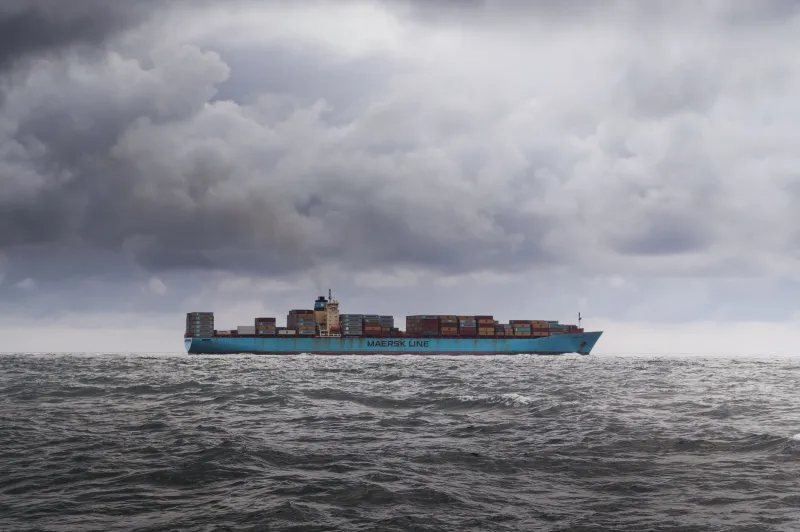
The Ghost itself has also attracted renewed attention as a narrative device. The ship as closed system — hierarchical, isolated, governed by authority that has no external check — speaks directly to contemporary anxieties about institutions, workplaces, and communities that operate beyond meaningful oversight. London's vessel is, in this reading, a laboratory for examining what organizations become when accountability is removed.
The Adaptation Problem
No filmmaker has yet fully solved what might be called the novel's central adaptation problem: how to dramatize a philosophical argument without either reducing it to action-movie spectacle or slowing the narrative to a halt.
Larsen's power in the novel comes substantially from his conversations with Van Weyden — extended, probing exchanges in which he articulates his worldview with genuine intellectual force. These scenes are difficult to translate to screen without appearing static. Filmmakers who have sacrificed them in favor of physical conflict have generally produced more conventionally entertaining but thematically thinner films. Those who have preserved them have sometimes produced work that rewards patience but tests it.
The production currently in development at The Sea Wolf Movie is working within this tradition of challenge, attempting to find a cinematic language adequate to London's ideas without betraying the novel's narrative momentum. The source material demands nothing less.
Why the Story Persists
At its core, The Sea Wolf endures because it asks a question that no era has satisfactorily answered: what do we owe one another when no external authority compels us to owe anything at all?
Larsen's answer — nothing — is coherent but intolerable. Van Weyden's answer — everything — is admirable but tested to its breaking point. The novel refuses to resolve this tension cheaply, and that refusal is what keeps filmmakers returning to it. A story that provides easy answers has a limited life. A story that poses a genuinely difficult question, in a setting that makes evasion impossible, is effectively inexhaustible.
The ocean, London understood, is the only setting honest enough for that question. It takes everything away and asks what you have left.