Derelict by Nature: Nine True Ghost Ships That Read Like Screenplays Already Written
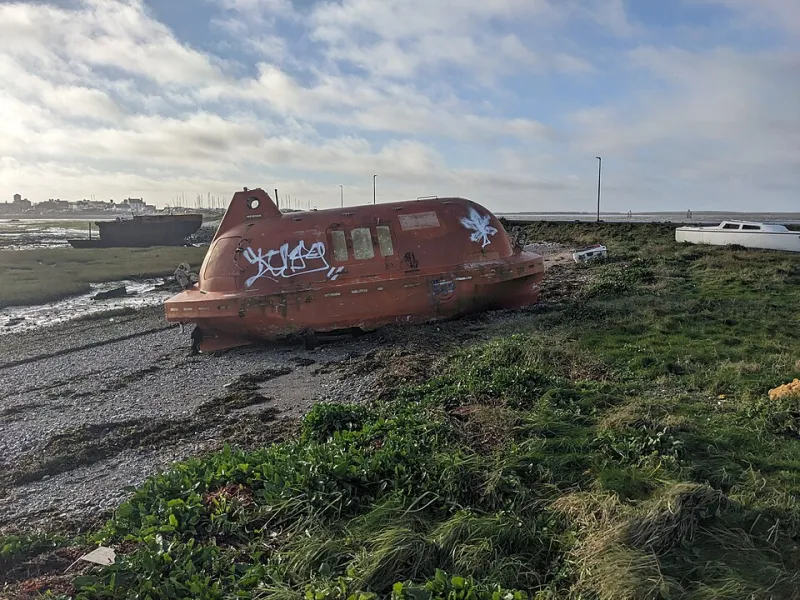
Photo: David Medcalf , CC BY-SA 2.0, via Wikimedia Commons
Screenwriters spend months searching for a premise with built-in dread, a closed setting, and an unanswerable question. The ocean has been quietly filing those premises away for centuries. Real derelict vessels — ships found afloat, intact, and utterly abandoned — are among the strangest documents American audiences have ever encountered, and their fingerprints are all over maritime cinema. Below, nine true ghost ships, ranked by how effortlessly their stories could translate to film.
1. The Mary Celeste (1872)
The benchmark. Found drifting between the Azores and Portugal with cargo intact, crew vanished, and no sign of struggle worth the name. The genius of the Mary Celeste as a screenplay is what it refuses to explain. Dozens of theories — alcohol vapor explosions, waterspouts, mutiny, piracy — have been proposed, and none have stuck. A film adaptation inherits that ambiguity for free. The 1935 British picture The Mystery of the Mary Celeste tried it early; the mystery has outlasted every attempt to close it.
2. The Baychimo (1931–1969)
A cargo steamer trapped in Alaskan pack ice, abandoned by her crew — and then sighted, again and again, drifting free across the Arctic for nearly four decades. Sailors tried to board her. Weather intervened. The Baychimo became a legend of the Bering Sea, a vessel that simply refused to be captured. Structurally, she is less a mystery than a character: an antagonist that cannot be caught. Someone should make that movie. Someone probably will.
3. The Carroll A. Deering (1921)
A five-masted schooner wrecked on North Carolina's Diamond Shoals with her crew gone, her navigation equipment removed, and her logbook missing. The FBI investigated. The case went nowhere. For an American audience, this one hits closest to home — the Deering's final act happened off Cape Hatteras, within sight of the coast, and the official silence around her remains a gift to any thriller writer.
4. MV Joyita (1955)
Twenty-five passengers and crew, vanished in the South Pacific. The ship was found five weeks later, listing, half-sunk, with no one aboard. Radio equipment worked. Life rafts were gone. The Joyita's mystery is human-scale in a way that resists tidy resolution — exactly the kind of ambiguity modern prestige drama thrives on.
5. The High Aim 6 (2003)
A Taiwanese fishing vessel found adrift near Australia, fully fueled and stocked, with the crew absent and later evidence pointing toward a mutiny at sea. Modern, documented, and grim — this is a story with a procedural spine that a filmmaker could hang a psychological thriller on.
6. The SS Ourang Medan (1947, disputed)
The most cinematic and the least verifiable: a Dutch freighter whose crew reportedly died with their eyes open, faces contorted, before the ship exploded. Historians doubt the Ourang Medan ever existed. That doubt is itself the hook — a ghost story about a ghost ship, perfect for a horror picture that wants to blur the line between folklore and record.
7. The Resolvchenie (1885)
Found derelict in the Atlantic, her crew of eleven gone overboard or into the boat, the whaler's fate pieced together from a single recovered logbook. Her story became the basis for one of the earliest American maritime mystery novels — proof that the derelict-as-narrative formula is older than cinema itself.
8. The MV Altair and the Modern Freight Derelicts
Through the 1990s and 2000s, coast guards from Florida to Portugal have boarded container ships and freighters drifting with no one at the helm — abandoned by crews fleeing debt, storms, or worse. These cases rarely make headlines, and that anonymity is precisely what makes them feel usable: contemporary, plausible, and unsettlingly ordinary.
9. The Ticonderoga's Ghost Stories
A different flavor of haunting — the plague ship of 1852, whose passage to Australia killed dozens and whose reputation as an ill-fated vessel followed her long after. Less a whodunit than a slow-burn atmospheric horror setup.
Why These Stories Endure
Every entry above shares one structural advantage over invented fiction: the audience knows the ocean keeps its secrets. A screenwriter can invent a monster; the Mary Celeste offers something worse — the certainty that there was an answer, and that no one will ever hear it. That is the engine behind the enduring appetite for derelict-ship cinema, and it is why these true stories will keep resurfacing on American screens, one adaptation at a time.